










Can you compare the leading custom label manufacturers for quality, customization, and export service?
Oct 13, 2026

Several label printing companies stand out for custom branding work, and each one leads in a different area. This guide compares Computype, Resource Label Group, Consolidated Label, Discount Labels, and Smith Corona on customization, materials, printing methods, and best fit. You will see how each supplier handles a logo, a design system, and a full branding program. The focus stays on custom branding projects rather than standard stock labels. Your goal is simple: match a manufacturer to your specific project. So which label printing companies are best for custom branding projects rather than standard stock labels? The answer depends on your run size, your material needs, and your production environment, not on a single overall winner.
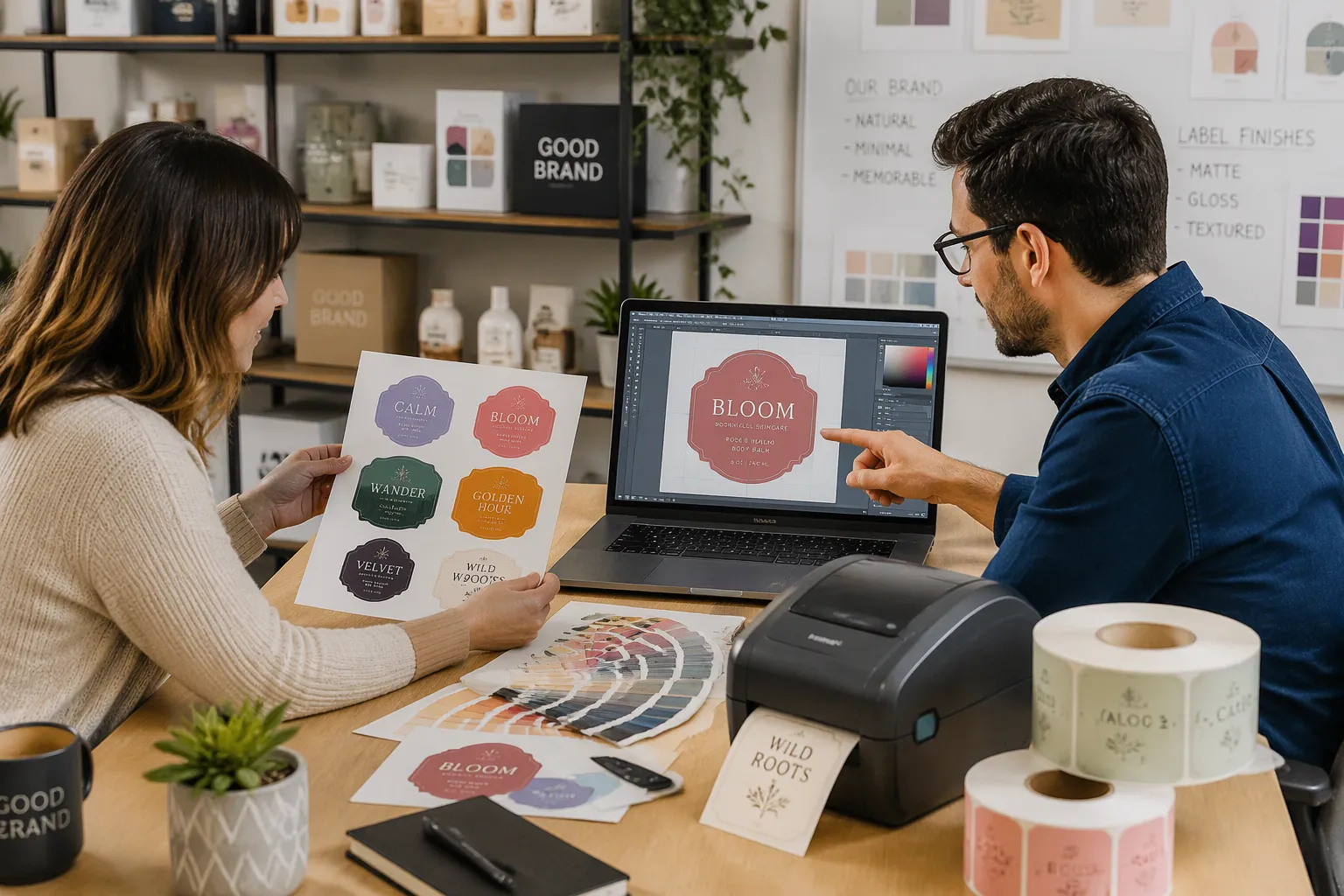
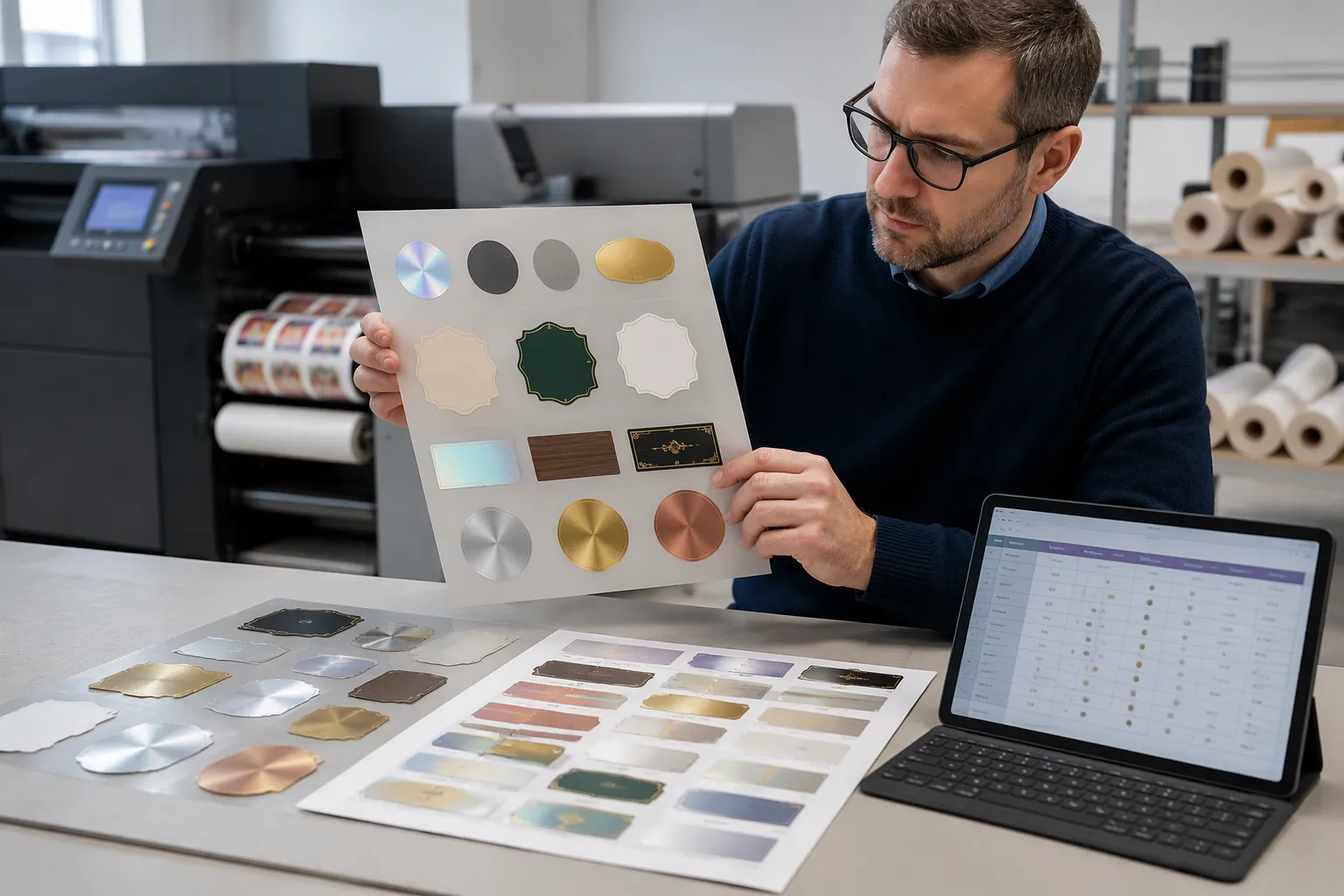
You can judge every custom label maker on six useful points. Customization covers die shapes, variable data, and matching brand colors. Material options decide whether a label survives moisture, heat, or rubbing. Printing methods range from flexographic runs to digital presses. Finishing includes lamination, varnish, embossing, and foil. Turnaround tells you how fast finished custom labels reach your line. Cost fit shows where each supplier lands on price per label.
These points matter because a branding project fails when one link breaks. A striking custom design means little if the adhesive lifts in a freezer. A low unit price means little if the reorder takes six weeks. Compare suppliers on technical performance, application fit, regulatory compliance, and cost. Keep the comparison factual, and match each supplier to the job it handles best.
| Supplier | Customization | Materials | Printing Methods | Finishing | Turnaround | Cost Fit |
|---|---|---|---|---|---|---|
| Computype | Application-driven engineering | Specialty stocks and adhesives for demanding conditions | Digital and specialty processes | Durable topcoats and protective layers | Project-based | Higher, justified by performance |
| Resource Label Group | Broad, multi-format programs | Wide catalog | Flexo, digital, hybrid | Full range | Moderate to standard | Mid to high volume |
| Consolidated Label | Flexible across run sizes | Broad stock selection | Digital and flexo | Common finishes | Standard | Short to mid runs |
| Discount Labels | Simple to moderate | Standard stocks | Digital | Basic finishes | Fast | Short runs |
| Smith Corona | Specialty and niche work | Specialty stocks | Digital and specialty | Distinctive finishes | Varies by project | Small batches |
Custom label printing costs usually range from $0.03 to $0.30 per label. Method, material, and finish drive the final figure. Digital printing often carries no setup fee on short runs, which helps small branding projects. Full-color process printing suits photographic artwork and gradients. Flexo rewards long runs with lower unit costs. Ask each supplier for a quote at your actual quantity, because pricing shifts sharply with volume.
Treat this table as a starting map, not a verdict. Each of these custom label makers earns its place through a different strength. The sections below show where each one fits, so you can shortlist two or three finished-label suppliers and request samples before you commit.
A standard stock label has a set size, a set shape, and only a few material choices. You pick one from a catalog and put it on. A custom label project begins with your own artwork and how you will use it. You pick different shapes, materials, and finishes to match the product, the container, and the shelf.
Branding projects usually need that freedom. Your logo has to sit in the right spot. Your brand colors have to come out the same on every run. A custom die cuts the outline you designed, and custom dies usually cost extra when stock shapes do not fit. That one-time tooling fee buys a special shape that no competitor can copy from a catalog.
Custom business labels also have finishes that stock options rarely offer. Spot varnish, foil, and embossing add texture that helps product branding at the point of sale. Each choice adds cost, so weigh it against the shelf impact you expect.
Not every label needs a custom die. Simple barcode labels and ecommerce shipping labels often work fine on a desktop printer with off-brand label sheets. You print on demand, you change the data freely, and you skip tooling costs entirely.
That approach works for internal tracking and short-lived shipping needs. It falls short when the label faces moisture, heat, or rubbing, or when the label stands for your brand on a retail shelf. At that point, professional custom label printing earns its cost through durability and steady color.
Ask one question before you decide. Will the finished labels carry your design into a customer's hands, or will they disappear after scanning? The answer points you toward customization or toward a stock solution.
Computype designs its custom labels around the conditions your label must survive. You explain the surface, the temperature changes, the chemical exposure, and how long the label must last. The team then picks a stock and an adhesive that match those conditions. This way differs from choosing a pretty material first and hoping it holds up. You get a custom label built for the job, not changed to fit it after a failure.
The customization choices also cover the printing itself. You can ask for durable topcoats, protective layers, and variable data for serial numbers or tracking codes. The design process starts with your artwork and your application data together, so the finished labels work on the line and on the product. Expect a project-based timeline rather than a fixed catalog turnaround. That pace suits buyers who value performance over speed.
Computype fits specialized business labels that face hard conditions. Think industrial equipment plates, medical device tracking, and asset tags that must stay readable for years. These are packaging and branding focused applications where the label carries both your identity and critical data. A lifted edge or a faded barcode costs real money in those settings.
Choose Computype when your branding project demands technical durability and your run justifies the higher unit cost. You gain a partner who treats the label as a component, not a decoration. For a custom label program in a demanding environment, that precision is the point.
Resource Label Group gives you many ways to customize your labels. You can pick the shape, the stock, the adhesive, and the finish all in one talk. The team uses flexographic, digital, and hybrid presses, so your job goes to the method that fits the run. Short runs use digital output. Long runs switch to flexo for steady unit costs. Hybrid printing handles jobs that need both.
The customization goes beyond the label itself. You can use one design across shrink sleeves, flexible packaging, and folding cartons. That range supports customization across packaging formats, which keeps your brand consistent from the bottle to the shelf. Finishing options include lamination, varnish, foil, and embossing. Each choice changes how the finished labels feel in your hand and how they hold up in transit.
Resource Label Group fits brands that want one partner across many label formats and finishes. Picture a product line with three bottle sizes, a carton, and a promotional sticker. One supplier can handle all of them under one approval process. Your team spends less time chasing vendors and more time on the brand.
This partner suits packaging and branding applications where consistency matters more than speed. The same color standard applies to every format, so your shelf presence stays uniform. Choose Resource Label Group when your branding project spans several product lines and you want one point of contact for packaging and labeling solutions. Ask for samples of each format first. Compare the color match and the finish across the full set before you approve the run.
Consolidated Label offers a wide range of stock choices for custom labels. You can pick paper, synthetic, and specialty stocks to fit your container and the conditions it faces. Adhesive choices work the same way. A chilled product needs a different adhesive than a dry retail shelf. The team helps you match stock and adhesive to the job, so your finished labels stay in place through handling and storage.
Printing methods include digital and flexographic output. Digital presses work well for short runs and artwork that changes often. Flexo saves you money as quantities go up. Full-color process printing handles photo artwork and smooth gradients, which matters for consumer products and packaging. Finishing options include lamination and varnish, and you can add custom design elements like variable data or a special die shape. Each choice supports customization that fits your brand instead of a catalog default.
Consolidated Label fits brands that grow from short runs to larger orders. You might start with a small batch for a test market. As demand grows, you raise the quantity without changing suppliers or re-approving the artwork. That continuity protects your branding across every reorder.
The supplier also suits consumer product labeling where artwork changes with each season or promotion. You can order a modest run, test the response, and reorder fast. Flexible materials and design options let you adjust the look without a new tooling cycle each time. Choose Consolidated Label when your custom label program needs room to grow. Ask for samples at your current quantity and at your projected volume. Compare the color match and the finish across both runs before you commit.
Discount Labels builds its service around speed. You send artwork, you approve a proof, and the press runs without a long queue behind it. Digital presses carry most of the work, which keeps setup light and lets a small batch move through production quickly. That model suits a brand that needs labels on hand for a launch, a trade show, or a seasonal push.
The customization options stay practical rather than exotic. You can choose from standard stocks, pick a die shape, and add common finishes such as lamination or varnish. Variable data lets you number a promotional run or print different codes on the same sheet. A custom design with a clean logo and strong color still comes out sharp, because digital output handles full-color artwork well. What you trade is the deep material catalog and the heavy tooling work that a technical or specialty shop provides. For straightforward branding work, that trade rarely hurts.
Discount Labels fits fast replenishment and short-run promotional labels. Picture a coffee roaster that sells at weekend markets. The owner needs a few hundred finished labels with a new roast name, and the order has to ship this week. A quick-turn digital shop handles that job without a minimum that forces excess stock.
The same fit applies to mid-size brands testing a new flavor or a limited edition. You order a modest run, watch the sell-through, and reorder fast when demand holds. Custom label printing at this pace keeps your shelves stocked and your artwork current. Choose Discount Labels when speed and simple customization matter more than specialty stocks. Request a sample pack first, then confirm the stock and finish against your container before you approve the full run.
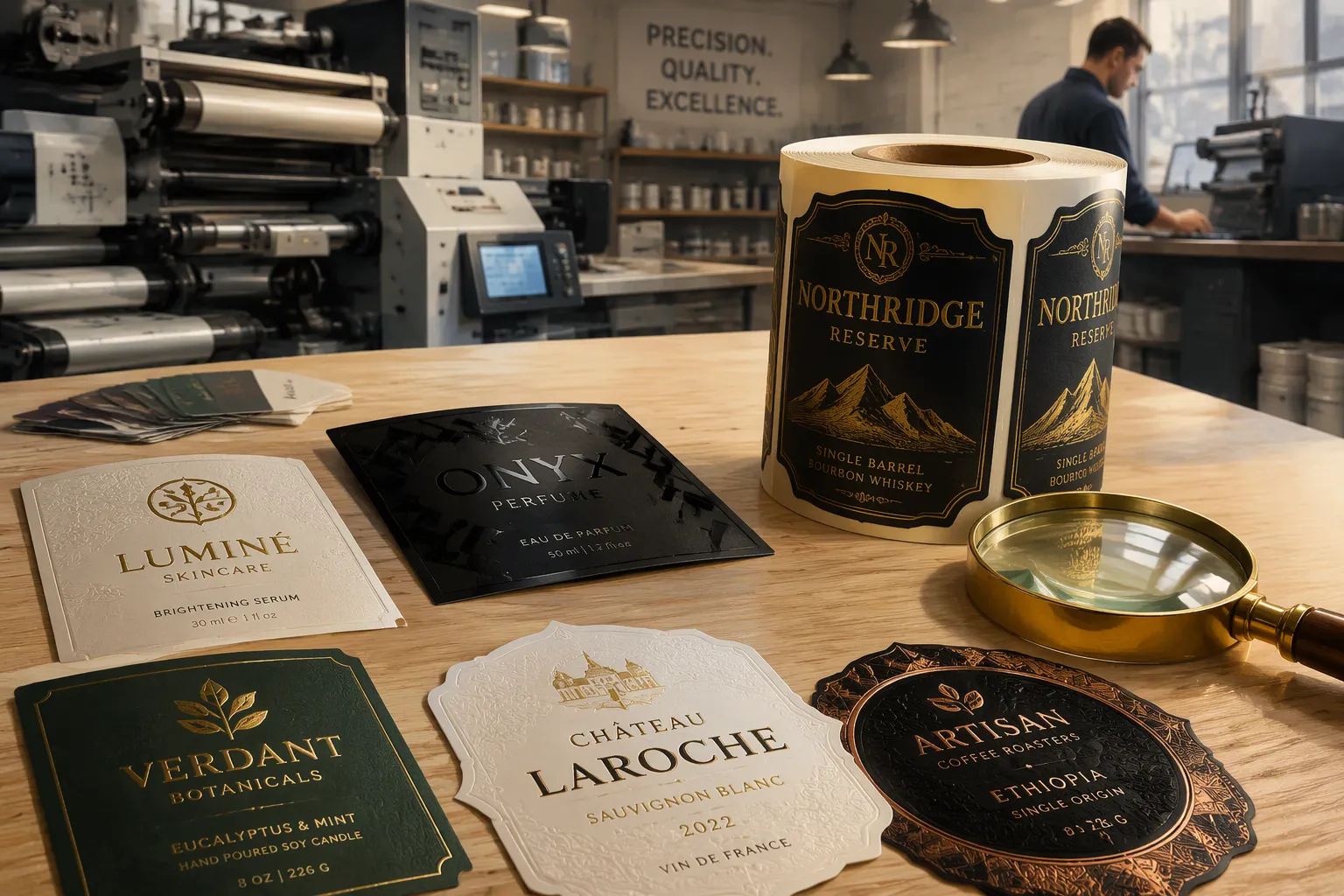
Smith Corona works best when a standard stock label cannot tell your brand story. The company offers specialty stocks and finishing options that fit niche branding needs. You can choose textured papers, metallic faces, and clear films that change how a label looks on the shelf. Finishing options add depth as well. Foil stamping, embossing, and spot varnish give a custom logo sticker a feel that flat printing cannot match.
The customization process starts with your artwork and your container. You describe the product, the surface, and the look you want. The team then matches stock and finish to that plan. This approach gives you design flexibility and presentation control in one step. A small brand can order a distinctive label without committing to a large volume. Digital output keeps setup light on short runs, so a limited edition stays affordable.
Smith Corona fits distinctive, small-batch custom label work. Picture a craft brewery releasing a seasonal bottle, or a skincare maker launching a gift set. These are packaging and branding focused applications where the label itself sells the product. A specialty stock and a foil accent deliver an elevated product appearance that a plain paper label cannot.
The supplier also suits specialized business labels for boutique consumer products and packaging. You get a custom label that looks different from every competitor on the shelf. Choose Smith Corona when your branding project values a unique material and a refined finish over volume pricing. Request physical samples of each stock and finish first. Hold them against your actual container and check the logo clarity under store lighting before you approve the run.

A short list of questions can save you from a costly redo. Ask every supplier the same set, then compare the answers side by side.
Add one question about proofing. Ask whether you approve a physical proof or only a digital file. A physical proof shows true color and finish, and it protects your custom design from surprises on press.
Cost tracking starts with the quote, not the invoice. Ask for pricing at your real quantity and at the amount you expect to reorder. Ask what causes a setup fee and what goes away on a repeat order. Many custom label manufacturers now offer eco-friendly stocks and carbon-neutral processes as standard, so ask about sustainable options before you assume they cost more.
Compare design tools and speed as well. Online Labels' Maestro Label Designer lets you build and preview artwork in a browser, and some suppliers advertise 2–3 day turnaround on short runs. Weigh those conveniences against material range and compliance support.
Compliance deserves a direct question. Tell each supplier your industry and ask which standards your finished custom labels must meet. Request paperwork for food contact, child safety, or regulated goods where relevant. Strong custom label manufacturers answer with documents, not promises. Use the same checklist for specialized business labels and for broad customization across packaging formats. That habit keeps your branding consistent and your files ready for an audit.
Every supplier fixes a different problem. Computype gives you tough, long-lasting labels. Resource Label Group handles full-service custom programs. Consolidated Label supports flexible mid-size runs. Discount Labels moves fast on short runs. Smith Corona takes on specialty niche work. To decide which label printing companies are best for custom branding projects rather than standard stock labels, think about your run size, your material and finishing needs, your environment, turnaround, and compliance rules. The best custom label makers earn their spot by fitting your job, not by being one overall winner. Your branding works when the custom label and design match the task. Ask the suppliers that fit your project for samples or quotes.
Begin with the smallest amount that covers your launch or test market. Digital printing often has no setup fee on short runs, so a small batch stays cheap. Increase the quantity on reorder once demand proves steady. This approach protects your budget and your shelf space.
Yes. A physical proof shows true color and finish on your actual stock. Digital files can look right on screen and shift on press. Hold the proof against your container under store lighting. Approve it in writing before production starts.
Ask whether the supplier checks your artwork for print readiness. Good partners review resolution, bleed, and color mode before the press runs. Some offer browser-based design tools for quick previews. Confirm who owns the final files and whether changes cost extra.
Ask each supplier for turnaround at your real quantity, not a catalog average. Confirm whether the clock starts at proof approval or at order placement. Ask what a rush order costs. Compare those answers side by side before you commit to a production schedule.
Tell each supplier your industry and ask which standards your labels must meet. Request paperwork for food contact, child safety, or regulated goods where relevant. Strong manufacturers answer with documents, not promises. Keep those files with your artwork for future audits.