











What are the best manufacturers for custom labels and printed packaging in one order?
Oct 14, 2026
Buyers who get paper, film, thermal, and specialty labels from different suppliers pay twice. They pay for shipping, and they pay again in the hours spent chasing quotes and checking quality. One versatile partner takes away that burden. When asking who are the most versatile label manufacturers for paper and beyond, the answer includes material giants like Avery Dennison, 3M, and UPM Raflatac. It also includes custom converters like CCL Industries and Multi-Color Corporation, and full-service source manufacturers like Wenzhou Baihengyu Printing. Versatility here means four things: a wide substrate range, coverage of multiple print technologies, in-house converting, and steady quality with reliable turnaround. Direct thermal and thermal transfer work, durable film constructions, and anti-counterfeiting features are all within one supplier's reach. That mix lets a buyer combine orders and keep one standard across every label.
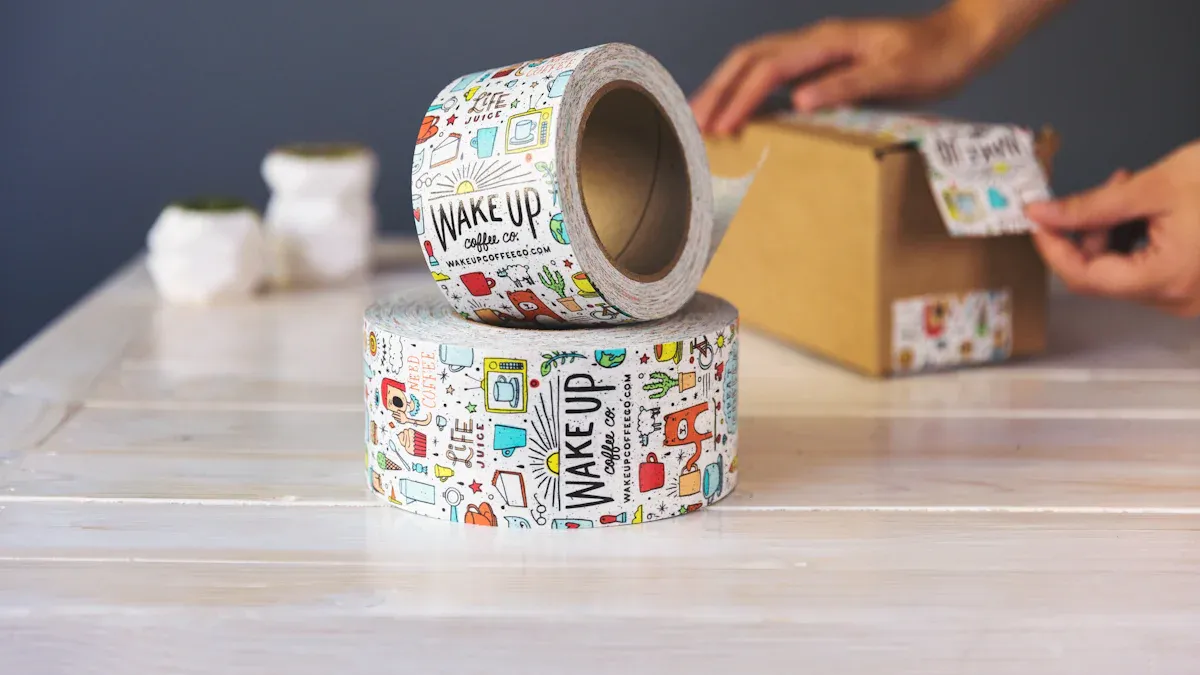
A versatile label manufacturer handles many jobs under one roof. The buyer sends one purchase order instead of five. The supplier controls quality from raw material to delivery. That control separates a true source manufacturer from a broker.
Paper labels use a paper facestock, the printable top layer, on a liner, the backing sheet that holds the label until it is applied. An adhesive sits between them. Film labels use plastic film like PVC or PET instead of paper, and this film resists moisture and tearing. Thermal labels use heat instead of ink. Direct thermal labels have a chemically coated surface that darkens inside the printer, while thermal transfer labels need a ribbon to move ink onto the facestock. Specialty materials add security, durability, or compliance features for demanding product packaging.
Substrate range comes first. A strong supplier stocks coated paper, thermal paper, synthetic paper, PVC, PET, matte silver, and fragile paper. That wide range of materials covers most product labels, from shipping to anti-counterfeiting. Adhesive choice matters just as much, and the three main families behave differently.
| Adhesive | Strength | Temperature | Best Use |
|---|---|---|---|
| Water-based | Strong initial tack | Good, some grades to 150°C | Paper and general labels |
| Solvent (oil-based) | Outstanding bond | Good for outdoor use | Curved and complex surfaces |
| Hot-melt | High initial bond | Limited near melting point | Low-temperature, oily surfaces |
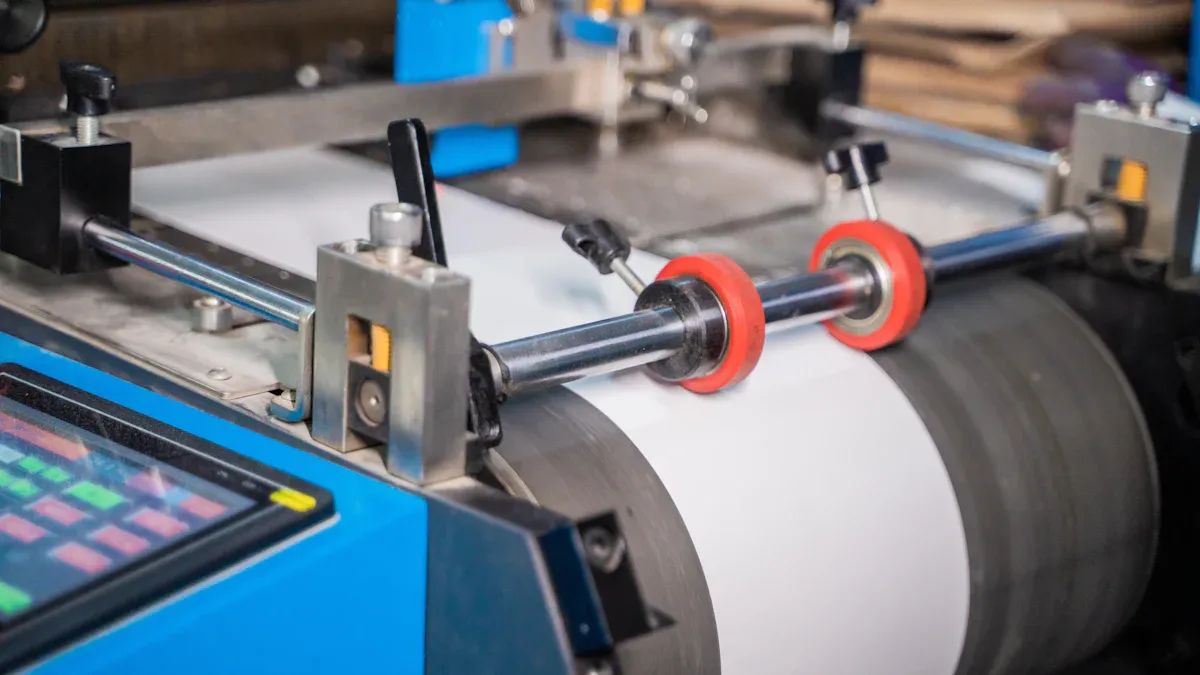
In-house printing, die-cutting, and finishing keep lead times short. Quality control from incoming material to final carton protects consistency. Wenzhou Baihengyu Printing shows this model well. The company covers design, printing, deep processing, and logistics in one stop, with foil stamping, spot UV, lamination, embossing, and variable data printing available.
The market has three levels. Material giants make the facestock and adhesive that converters build on. Custom converters turn those materials into finished products at scale. Source manufacturers print, finish, and ship under one roof. Each level answers a different buying question.
Avery Dennison sits at the top of the supply chain. The company makes pressure-sensitive label materials, including films, papers, and thermal printing solutions, and ships them to converters worldwide. Its variable information printing line supports high-speed processing for barcode and shipping work. Its large size supports that reach.
| Metric | Value | Year |
|---|---|---|
| Total sales | $8.4 billion | 2023 |
| Materials Group net sales | $5.8 billion | 2023 |
| Total top line revenue | $9 billion | 2022 |
| RFID technology revenue | ~$800 million | 2022 |
3M and UPM Raflatac compete on how broad their product lines are. Both carry film and paper lines for durable and specialty uses. A market sizing report places Avery Dennison, CCL Industries, UPM Raflatac, and 3M each at 5–12% of global market share. UPM Raflatac supplies pressure-sensitive label materials to food and beverage, pharmaceutical, logistics, retail, and industrial buyers.
CCL Industries and Multi-Color Corporation handle large-scale custom work. CCL reported 2024 sales of USD 7.245 billion after nine acquisitions since January 2023, which also made its automation and RFID capabilities stronger. Multi-Color runs a global gravure plant network for premium beverage and personal-care customers. Consolidated Label covers custom labels, shrink sleeves, and flexible packets. Taylor works across pressure-sensitive, in-mold, RFID, and shrink sleeve formats.
Wenzhou Baihengyu Printing stands for the source manufacturer level. The company runs standardized workshops with advanced printing, die-cutting, and post-processing equipment. Its range covers coated paper, thermal paper, synthetic paper, PVC, PET, matte silver, and frangible paper, with oil-based, hot-melt, and water-based adhesives. Buyers can get food and daily chemical labels, electronic appliance labels, and anti-counterfeiting or tamper-evident labels from one partner. Finishing options include hot stamping, spot UV coating, lamination, embossing, and variable data printing. The service model fits export buyers well:
That mix of flexible label materials and one-stop service makes the company a practical choice for buyers who need paper, film, and thermal labels from a single source.
A side-by-side view settles most sourcing debates. The table below maps the four label categories against manufacturer strengths, typical applications, and turnaround.
| Category | Strongest Suppliers | Typical Applications | Turnaround |
|---|---|---|---|
| Paper | UPM Raflatac, Verso Paper, Wenzhou Baihengyu Printing | Prime product labels, variable information | Standard to fast |
| Film | Avery Dennison, 3M, CCL Industries | Durable, outdoor, and industrial goods | Standard |
| Thermal | Avery Dennison, Wenzhou Baihengyu Printing | Shipping, barcode, compliance | Fast |
| Specialty | Multi-Color, Taylor, Wenzhou Baihengyu Printing | Security, food, cosmetics, electronics | Project-based |
Paper is still the biggest category. UPM Specialty Materials says its line includes coated one-side, coated two-side, and woodfree uncoated stocks. These cover premium product labels and variable information work. Verso Paper says it has the largest pressure sensitive paper portfolio in North America, with more than 180 specialty grades.
Direct thermal labels do not need a ribbon. The printer heats a coated surface, and the image shows up. This simple process explains why direct thermal printing is expected to hold the largest market share at 29% in 2025. Retail, logistics, healthcare, and hospitality demand drive this. Formers Paper and POSPaper both build their catalogs around this format. They offer thermal shipping, barcode, and linerless direct thermal labels.
The trade-off is how long the label lasts. Direct thermal labels often stay readable for under six months. Outdoor exposure fades them within days to weeks. Thermal transfer labels use a ribbon and stay readable for years. This suits asset tags, compliance marks, and industrial environments exposed to heat, chemicals, or abrasion.
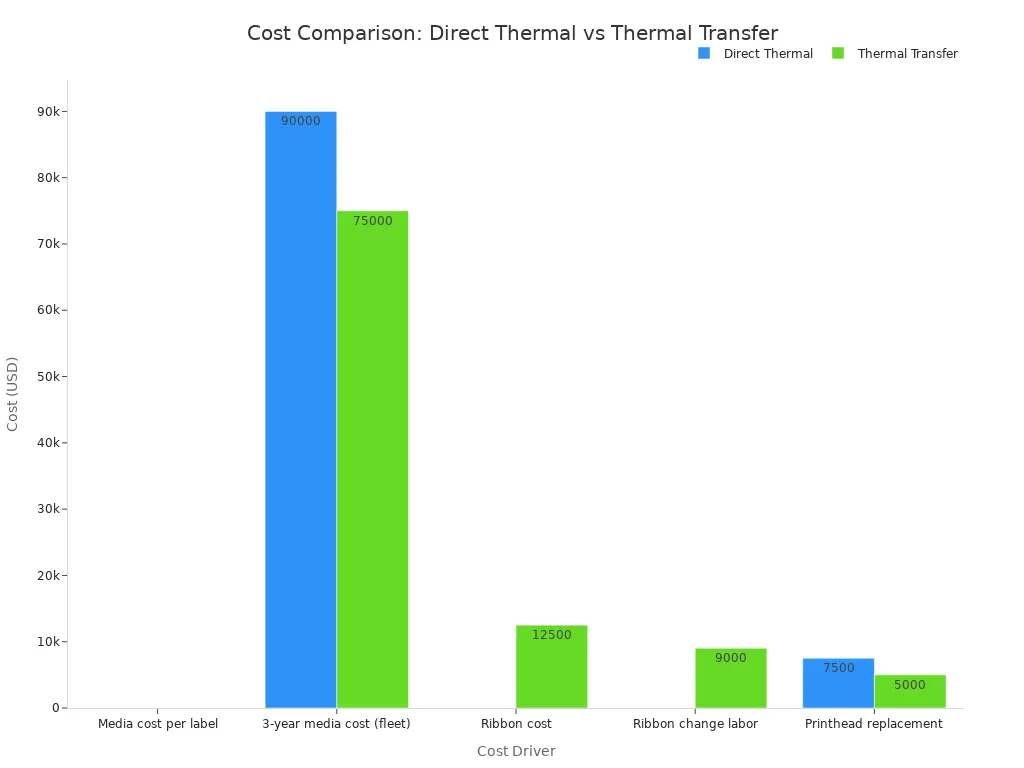
Cost tells a more subtle story. Across a ten-printer fleet running three years, direct thermal saves on ribbon and ribbon-change labor. Thermal transfer saves on media and printhead wear. The measurable gap between the two narrows to a few thousand dollars before failure costs. Once UV, heat, or label life beyond 30 days enters the picture, reprint and relabeling costs tip the total toward thermal transfer.
Avery Dennison leads on thermal printing materials for high-speed processing. Its variable information line serves barcode and shipping work at scale. 3M and UPM Raflatac carry deep film and paper portfolios for durable and specialty uses. CCL Industries and Multi-Color Corporation take on large custom programs. Wenzhou Baihengyu Printing covers coated paper, synthetic paper, PVC, PET, matte silver, and frangible stock under one roof. It also offers oil-based, hot-melt, and water-based adhesives.
Specialty work splits by application. Security and anti-counterfeiting labels demand tamper-evident construction. Food and cosmetic labels need compliant adhesives and finishes. Electronics labels must resist heat and solvents. Logistics labels prioritize scan reliability. Buyers should confirm that a supplier's label materials and finishing options match the end use before committing.
US Label's advice gives buyers a good place to start. Match your label materials, adhesive, sheet size, and printer type to your production, packaging, and compliance needs. A warehouse shipping label needs different stock than a cosmetic label for store shelves. Buyers should check that the material works with their printer before placing a bulk order.
Volume decides the printing method. Flexographic presses have high upfront plate costs, and that money only pays off over long, steady runs. Inkjet and digital presses skip plate-making, so they fit short runs and multi-SKU jobs. The switch point sits near 25,000 to 50,000 labels per SKU per run. Above that range, flexo wins on unit cost. Below it, digital inkjet usually costs less.
Turnaround follows the same logic. Small sample orders let buyers test quality before they commit. Large export orders reward suppliers who have in-house converting and steady material supply. Buyers should ask about free design, sample making, custom quotes, and order tracking. Wenzhou Baihengyu Printing offers all four, from sample runs to full export shipments.
Inkjet label printing works best when artwork changes often. Flexo needs a separate photopolymer plate for each color, which adds setup cost and lead time. Inkjet prints straight from files, so serial numbers, barcodes, and regional text can change label to label without new plates. Buyers with seasonal or multi-SKU jobs should ask suppliers about variable data capability. Mark Andy, MCS, and Atlantic Zeiser all build integrated variable data systems for inkjet presses.
Before committing, buyers should ask a short set of questions:
Thermal labels deserve their own check. Buyers should confirm whether the supplier stocks both direct thermal and thermal transfer labels, since thermal printing needs differ by printer makers and label printer brands. A supplier with broad thermal coverage lowers the risk of a mismatch between label and hardware.
Avery Dennison, 3M, and UPM Raflatac earn the versatile title because they offer so many materials. CCL Industries, Multi-Color Corporation, and Wenzhou Baihengyu Printing add in-house converting and steady quality. Together they cover paper, film, thermal labels, and specialty stock without a second supplier.
The right pick still depends on each buyer's mix of work, volume, budget, and turnaround. Shortlist two or three candidates, then ask for samples across all four categories. Compare print quality, direct thermal performance, and lead times. Confirm quality credentials such as ISO 9001 and FDA 21 CFR 175.105 before you commit. That sample test shows buyers who are the most versatile label manufacturers for paper and film work in practice, not just on paper.
Yes. A source manufacturer keeps coated paper, synthetic paper, PVC, PET, and thermal stock in one plant. Wenzhou Baihengyu Printing does printing, die-cutting, and finishing all under one roof. Buyers send a single order and keep one quality standard for every label.
Direct thermal labels need no ribbon, so they work well for fast barcode and shipping labels. They fade when exposed to heat and sunlight. Thermal transfer labels use a ribbon and stay readable for years. Buyers should match the stock to the printer and to how long the label needs to last.
Buyers ask for samples across paper, film, direct thermal labels, and specialty stock. They check print sharpness, adhesive grip, and die-cut accuracy. Then they compare lead times. A supplier with in-house converting controls each step, and that control shows up in the sample.
Inkjet wins on short runs and frequent artwork changes. It prints straight from files, so variable data costs nothing extra. Flexo needs a plate per color, and that setup only pays off on long, steady runs. Buyers should ask about variable data capability before they choose.
Buyers should confirm the supplier stocks both direct thermal and thermal transfer stock. Direct thermal printing fades fast in sunlight, so outdoor work needs a ribbon-based option. A supplier with broad thermal coverage lowers the risk of a mismatch between label and hardware.