











How to Choose a Reliable Custom Label Manufacturer for Your Products
Sep 14, 2026
Thermal paper labels are widely used in logistics, retail, warehousing, healthcare, food packaging, and many other industries. They are convenient to print, easy to process, and suitable for applications where variable information such as barcodes, product names, dates, quantities, and tracking numbers needs to be updated frequently.
However, not every thermal paper label is suitable for every printing application. Choosing the wrong material can lead to poor print quality, unclear barcodes, adhesive failure, or labels that fade before the information is no longer needed. For businesses purchasing labels in bulk, material selection should therefore be based on the printer, application environment, label life, and surface requirements.
This guide explains the main factors to consider when choosing thermal paper labels and how to select the right type for different applications.
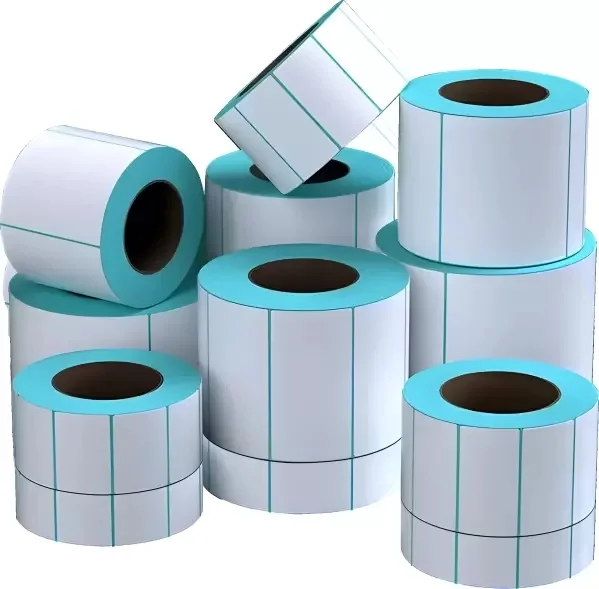
Thermal paper labels are self-adhesive labels made with a special heat-sensitive coating. Unlike conventional labels, direct thermal printing does not require ink or toner. The printer's thermal printhead generates heat in specific areas of the label, causing the coating to react and form text, numbers, or images.
This printing method makes thermal labels particularly suitable for short-term and variable-data applications. Common examples include shipping labels, warehouse identification labels, weighing labels, retail price labels, receipt-related labels, and temporary product information labels.
For businesses looking for a practical solution, <a href="http://www.baihenyuprint.com/blank-print-class-series/thermal-paper-blank-printable-labels.html">thermal paper blank printable labels</a> can be customized according to different printer types, label sizes, adhesive requirements, and application conditions.
The first consideration is the type of printer being used. Direct thermal printers are designed to print directly onto heat-sensitive materials, while thermal transfer printers normally use a ribbon to transfer ink onto the label surface.
If your application uses a direct thermal printer, direct thermal paper is usually the appropriate choice. It eliminates the need for a ribbon and simplifies daily printing operations.
Before placing an order, check the printer manufacturer's specifications, including:
A label may have excellent print quality but still perform poorly if its dimensions or roll specifications do not match the printer.
Thermal paper is generally more suitable for short-term applications than for products that require long-term information retention.
For example, a shipping label may only need to remain readable throughout transportation and delivery. A warehouse location label, however, may need to stay legible for months or longer.
When choosing thermal paper, consider how long the printed information must remain clear.
For short-term use, standard thermal paper can be suitable for applications such as:
If labels will be exposed to heat, sunlight, moisture, chemicals, or heavy handling, standard thermal paper may not be the best option. In these situations, synthetic materials such as PET or other specialized label materials may provide better durability.
The face material is only one part of a self-adhesive label. Adhesive performance is equally important.
Different products and surfaces require different adhesive characteristics. A label applied to a clean cardboard box is very different from one attached to plastic packaging, glass, metal, or a textured surface.
Common adhesive options include water-based adhesive, hot-melt adhesive, and oil-based adhesive. Each has different performance characteristics.
For example, a warehouse label applied to a corrugated carton may require reliable initial adhesion and stable performance during transportation. A label used on plastic packaging may require an adhesive that can maintain bonding on a relatively smooth, non-porous surface.
Temperature should also be considered. If labels are applied in cold storage or transported through environments with significant temperature changes, the adhesive needs to be selected accordingly.
This is why simply choosing a thermal paper label based on its paper quality is not enough. The combination of face material, adhesive, and application surface determines the actual performance of the finished label.
Logistics is one of the most common applications for thermal labels. Shipping and warehouse labels often contain barcodes, order numbers, destination information, product quantities, and tracking data.
For these applications, the most important requirements are usually:
In a high-volume warehouse, even a small problem with label feeding or adhesive performance can interrupt the workflow. Therefore, businesses should test labels on their actual printers before moving to large-scale production.
Label size also matters. Oversized labels may waste material, while labels that are too small may make barcodes or variable information difficult to scan.
Retail labels are often used for product identification, shelf management, weighing, and internal inventory control.
For these applications, print clarity is particularly important because product codes, item numbers, and barcodes need to be scanned accurately.
Retail environments may also require different label sizes and shapes. A compact label may be appropriate for small products, while larger labels can be used for cartons or shelf identification.
If the label is intended to remain on the product for an extended period, buyers should also consider exposure to handling, friction, moisture, and light. In some cases, a more durable label material may be preferable to standard thermal paper.
Thermal labels are also used in food and beverage operations for information such as production dates, weighing information, batch numbers, and internal inventory management.
However, food-related applications require careful consideration of the actual contact environment.
If the label is applied directly to food packaging, buyers should confirm that the selected material and adhesive are appropriate for the intended application and comply with applicable requirements.
For refrigerated or humid environments, adhesive performance becomes especially important. A label that works well on dry cardboard may not perform the same way on cold or moisture-exposed packaging.
Baihengyu Printing serves customers in food and beverage, daily chemical, pharmaceutical, electronics, hardware, industrial chemicals, and logistics-related industries. This broad application experience allows label specifications to be selected according to the actual use environment rather than simply using one standard material for every project.
Thermal labels are mainly functional products, but surface quality still affects printing results.
The thermal coating should provide consistent color development so that text and barcodes remain clear. Uneven coating can cause inconsistent printing, which may affect scanning performance.
For custom projects, other processing requirements may also need to be considered. Depending on the product and application, labels can be combined with different materials, adhesives, die-cutting methods, and finishing processes.
Baihengyu Printing has complete printing, die-cutting, and post-processing equipment and can provide customized label production for different requirements. Its product range includes coated paper, thermal paper, synthetic paper, PVC, PET, matte silver, fragile paper, and other self-adhesive materials.
When ordering thermal paper labels, buyers should provide more than just the label size.
A complete specification normally includes:
Material: Direct thermal paper or another suitable label material.
Size: Label width, height, and corner shape.
Roll specification: Core diameter, roll diameter, and winding direction.
Adhesive: Water-based, hot-melt, oil-based, or another suitable adhesive.
Printing: Blank, pre-printed, or variable-data compatible.
Application: Shipping, warehouse, retail, food, healthcare, product identification, or another use.
Environment: Normal indoor conditions, cold storage, humidity, outdoor exposure, or other conditions.
Providing this information helps the manufacturer recommend a more suitable structure instead of treating every thermal label as the same product.
One of the most practical steps when purchasing thermal labels is sample testing.
Before confirming a large order, test the labels on the actual printer and application surface. Check whether the labels feed smoothly, whether the print is dark and consistent, whether barcodes scan correctly, and whether the adhesive remains firmly attached.
It is also useful to test labels under the actual storage and transportation conditions. For example, refrigerated products should be tested in cold environments rather than only at room temperature.
Baihengyu Printing supports small-batch sample orders as well as large-volume production. The company provides design support, sample production, customized quotations, and order tracking, making it easier for customers to confirm specifications before moving into regular production.
Thermal labels are simple products on the surface, but their actual performance depends on several factors working together. Material, coating, adhesive, dimensions, printing compatibility, die cutting, and application conditions all need to be considered.
Wenzhou Baihengyu Printing Co., Ltd., established in 2010 and located in Wenzhou Economic and Technological Development Zone, specializes in self-adhesive labels and customized printing and packaging products. The company integrates creative design, printing production, post-processing, and logistics services.
With standardized production workshops and complete printing, die-cutting, and finishing equipment, Baihengyu can support both small sample projects and large export orders. Its production capabilities cover not only thermal paper labels but also food and daily chemical labels, electrical labels, anti-counterfeit labels, packaging boxes, product manuals, and other commercial printing products.
For businesses purchasing labels for different applications, this integrated production capability can simplify communication and reduce the need to coordinate multiple suppliers.
Choosing thermal paper labels is not simply a matter of selecting the cheapest or most common material. The right choice depends on the printer, label size, adhesive, printing requirements, application surface, environmental conditions, and expected service life.
For logistics and retail, clear printing and reliable feeding may be the main priorities. For food and refrigerated applications, adhesive and environmental performance require greater attention. For longer-term identification, a more durable synthetic material may be more appropriate than standard thermal paper.
By defining the application first and then selecting the material, adhesive, and specifications accordingly, businesses can reduce printing problems and improve label reliability.
For customized thermal paper labels and other self-adhesive printing products, working with an experienced manufacturer can also make the specification and production process more efficient. With its broad material range, production capabilities, quality control system, and customized service, Wenzhou Baihengyu Printing Co., Ltd. provides practical label solutions for different industries and printing applications.