











How to Choose Custom Food Labels for Different Types of Food Packaging
Sep 28, 2026

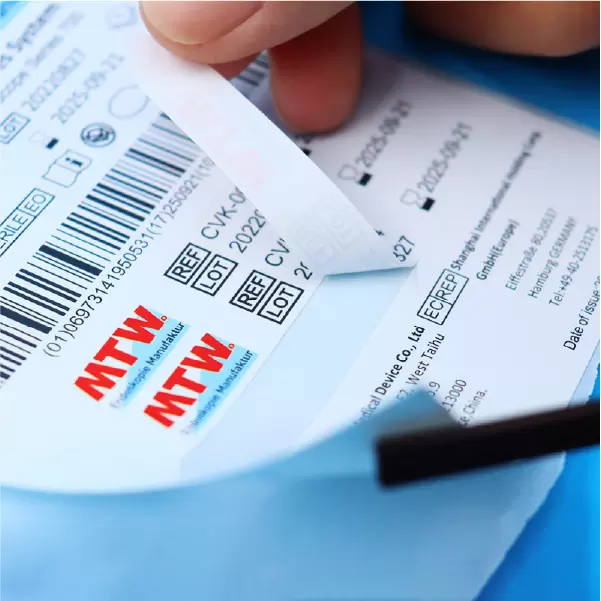
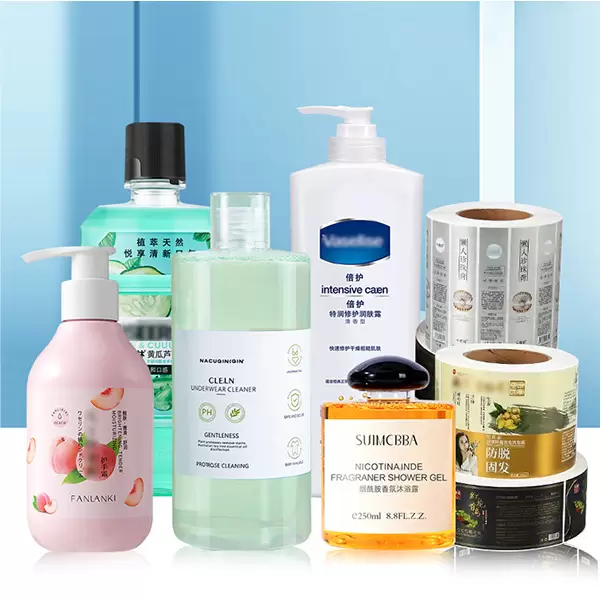
In the food and beverage industry, packaging does more than protect a product. It also provides important information, supports brand recognition, and helps products stand out on crowded shelves. A well-designed label can make a bottle, jar, pouch, carton, or food container look more professional while providing essential details such as product names, ingredients, specifications, barcodes, and usage information.
However, choosing the right label is not simply a matter of selecting an attractive design. Different packaging materials have different surface characteristics, and a label that works well on a glass bottle may not perform equally well on a plastic pouch or a refrigerated food container. For this reason, food and beverage companies need to work with a label supplier that understands both printing and the practical requirements of different packaging materials.
Wenzhou Baihengyu Printing Co., Ltd. has been engaged in the printing and packaging industry since 2010. Based in Wenzhou Economic and Technological Development Zone, Zhejiang Province, the company provides integrated services covering creative design, printing, finishing, and logistics. Its production capabilities include customized self-adhesive labels for food, beverages, daily chemicals, electronics, and other applications.
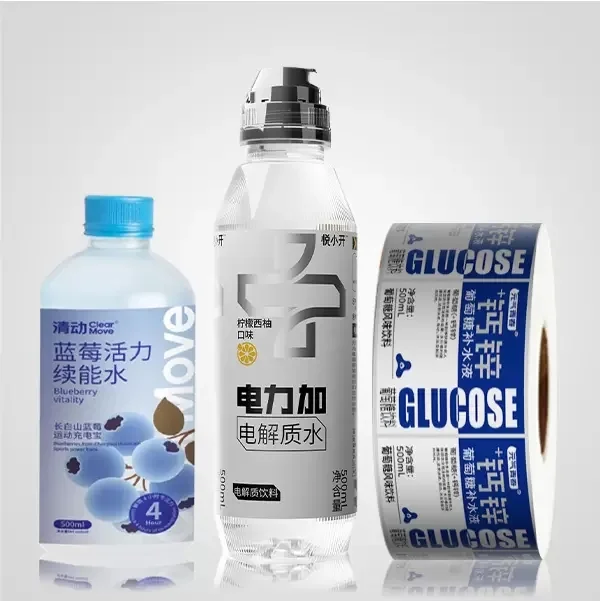
The first step in choosing a food and beverage label supplier is to identify the actual packaging material.
Glass bottles and jars usually provide a relatively smooth and stable surface, making them suitable for many types of adhesive labels. However, condensation, refrigeration, and moisture can affect label adhesion during storage and transportation.
Plastic containers are more complicated. PET, PP, PE, and other plastics can have different surface properties. Some flexible packaging materials can also deform during filling, handling, or squeezing. The label therefore needs to maintain sufficient adhesion and flexibility.
Paperboard packaging, such as cartons and food boxes, has a different structure again. The surface may be coated, textured, or relatively porous, so the label material and adhesive need to be selected according to the actual surface.
A capable supplier should not simply recommend one standard label for every application. Instead, it should evaluate the packaging material, surface condition, storage environment, application method, and expected service conditions before confirming the label structure.
Food and beverage labels can be produced using a wide range of materials. Common options include coated paper, thermal paper, synthetic paper, PVC, PET, matte silver materials, and tamper-evident paper.
Coated paper is widely used when a product requires clear graphics and an attractive printed appearance. It can be suitable for dry environments and many conventional food packages.
Synthetic paper can be a practical option when greater resistance to moisture and handling is required. It is often considered for applications where ordinary paper labels may become damaged more easily.
PET labels provide good dimensional stability and durability. They can be useful for beverage containers or products that require a stronger label structure.
For certain beverage applications, selecting a suitable beverage label solution can help address issues such as condensation, bottle curvature, label durability, and appearance.
The important point is that the label material should be selected based on the actual application rather than simply based on appearance or commonly used specifications.
The adhesive is just as important as the label material.
Even a high-quality printed label can fail if the adhesive is unsuitable for the packaging surface or operating environment. Food and beverage products may be exposed to refrigeration, moisture, oil, temperature changes, or frequent handling.
Different applications may require different adhesive technologies, including oil-based adhesive, hot-melt adhesive, and water-based adhesive.
For example, a label applied to a dry glass bottle at room temperature may have different requirements from one applied to a chilled beverage container. Similarly, labels used on flexible plastic packaging may need to accommodate movement of the package without lifting at the edges.
A professional supplier should be able to discuss adhesive options based on the packaging material and application conditions. It should also be able to provide samples for testing before large-scale production.
Food and beverage packaging often requires more than basic four-color printing. Brand owners may need special finishes to improve visual appeal or provide additional functional properties.
Common finishing options include:
For example, hot stamping can be used to highlight a logo or product name. Spot UV can create contrast between matte and glossy areas. Embossing can add a tactile effect to premium packaging.
For products requiring traceability or individualized information, variable data printing can also be useful. A supplier with in-house printing and finishing equipment can simplify production coordination and reduce the need to work with multiple vendors.
The shape of the package should also be considered before selecting a label supplier.
A label for a cylindrical glass bottle may require a different die-cutting structure from a label used on a flat food box. Curved surfaces can create problems such as wrinkles, edge lifting, or uneven application if the label construction is not appropriate.
The application method is another practical factor. Labels may be applied manually, semi-automatically, or through high-speed automatic labeling equipment. The label supplier needs to understand how the label will be applied so that dimensions, roll direction, core size, spacing, and other specifications can be matched to the customer's equipment.
This is especially important for beverage manufacturers with automated filling and labeling lines. A small mismatch in label specifications can cause unnecessary production interruptions.
Quality consistency is essential for food and beverage labels because packaging is often produced in large quantities.
A reliable supplier should have a clear quality inspection process covering raw materials, printing, die cutting, finishing, and final delivery. Color consistency, label dimensions, adhesive performance, printing clarity, and surface defects should all be checked according to the agreed specifications.
Baihengyu has established a quality inspection system covering the production process from incoming raw materials through finished product delivery. Its standardized production workshops and printing, die-cutting, and post-processing equipment support customized label production for different customer requirements.
This type of production system is particularly useful for customers who need both small sample orders and larger export orders.
Food and beverage companies rarely have identical packaging requirements. A new product may require a completely different label structure from an existing product.
Therefore, a supplier should be able to support customization in areas such as:
Baihengyu provides services including design support, sample production, customized quotation, and order tracking. Its product range covers self-adhesive labels made from multiple materials, allowing customers to select a suitable combination according to their packaging and application needs.
A supplier's production capacity is only one part of the evaluation. Communication and order flexibility are equally important.
A food manufacturer may need a small batch of samples during product development and then move to larger production after the packaging has been confirmed. If the supplier can support both stages, the transition can be more straightforward.
Baihengyu provides integrated services from design and printing to finishing and logistics. Its products are used in food and beverage, daily chemical, pharmaceutical and healthcare, electronics, industrial chemicals, logistics, and other industries.
For international customers, communication regarding specifications, artwork, samples, packaging, delivery schedules, and quality requirements is particularly important. A supplier familiar with export orders can make these processes easier to coordinate.
When comparing food and beverage label suppliers, it is better to evaluate them against the actual packaging rather than choosing solely on catalog specifications.
A practical evaluation process can include:
This approach helps avoid common problems such as poor adhesion, wrinkled labels, inconsistent colors, damaged surfaces, or labels that do not work properly with automated application equipment.
Choosing a food and beverage label supplier should start with the packaging material and actual application conditions. Glass, PET, flexible plastic, paperboard, and other packaging materials can require different combinations of label materials, adhesives, printing methods, and finishing processes.
A suitable supplier should therefore provide more than printing services. It should be able to help customers select materials, test adhesive performance, adjust label structures, manage customized printing, and maintain consistent quality during production.
Since 2010, Wenzhou Baihengyu Printing Co., Ltd. has focused on customized printing and packaging solutions, with capabilities covering self-adhesive labels, food and beverage labels, packaging boxes, manuals, and other commercial printing products. With multiple material options, adhesive technologies, printing processes, and finishing capabilities, the company can support different packaging requirements from initial samples to larger production orders.
For food and beverage brands, the right label supplier is ultimately one that can connect material selection, printing quality, adhesive performance, application requirements, and production consistency into one practical solution.