












How to Choose Self Adhesive Food Labels for Different Food Packaging Materials
Oct 5, 2026
Food packaging does more than protect a product. It also provides essential information, supports brand recognition, and influences how consumers perceive the product. Among all packaging components, the label is one of the most visible and frequently used elements. A well-designed food label needs to look attractive, remain readable, and stay firmly attached throughout storage, transportation, and everyday use.
However, not every food package requires the same type of label. A label designed for a dry snack pouch may not be suitable for a refrigerated food container. Similarly, a paper label that works well on a cardboard box may perform poorly on a plastic bottle exposed to moisture.

For this reason, choosing the right custom food labels starts with understanding the packaging material, storage environment, printing requirements, and application method.
The first step is to identify the packaging that the label will be applied to. Different packaging materials have different surface characteristics, which directly affect label adhesion and durability.
Common food packaging formats include:
For smooth surfaces such as glass and certain plastics, self-adhesive labels are often a practical choice. For flexible packaging, the label material needs to withstand bending without cracking or losing adhesion.
For cardboard food boxes, coated paper labels can provide a natural and economical appearance, while synthetic materials may be more appropriate when the package is exposed to moisture or condensation.
Before choosing the label, manufacturers should provide information about the actual packaging surface. A label supplier can then recommend a suitable material and adhesive combination.
Material selection is one of the most important decisions when producing custom food labels. The material affects appearance, printing quality, durability, and resistance to environmental conditions.
Coated paper is widely used for food labels because it provides a smooth surface for high-quality printing. It works particularly well for dry food products, gift packaging, snack products, and products where visual presentation is important.
Thermal paper is commonly used when variable information, barcodes, product identification, or short-term labeling is required. However, its suitability depends on the storage and handling conditions.
Synthetic paper provides better resistance to moisture than conventional paper and can be useful for food packaging exposed to refrigeration, condensation, or humid environments.
PET and PVC labels offer higher durability and resistance to water and handling. They can be considered for bottles, containers, and packaging that needs a more durable label.
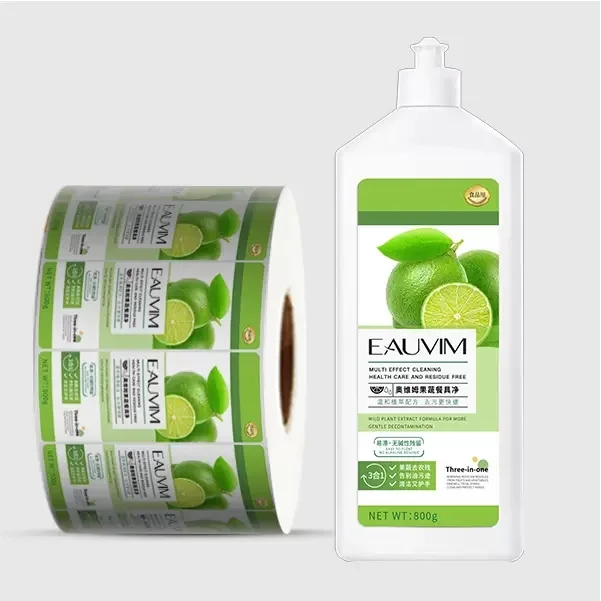
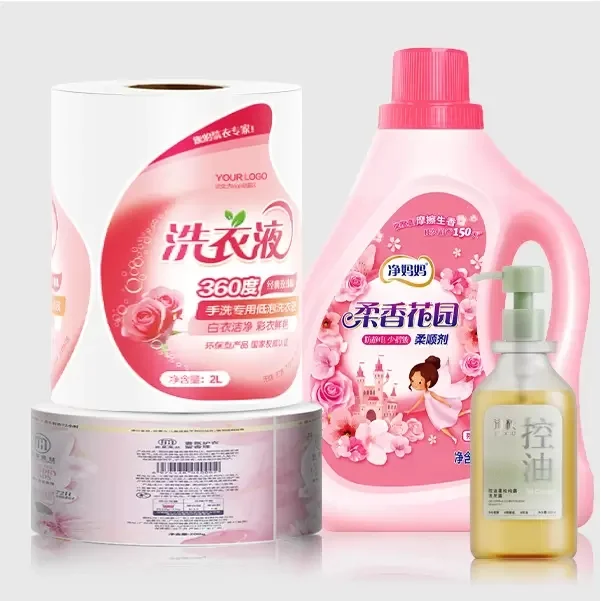
For businesses looking for a broader range of materials and specifications, <a href="http://www.baihenyuprint.com/customized-series/food-labels.html">custom food labels</a> can be customized according to the packaging structure, application environment, and printing requirements.
Food products are often stored in challenging environments. Refrigerated products may experience condensation, while frozen products can be exposed to very low temperatures. These conditions can affect both the label material and adhesive.
For chilled beverages, sauces, dairy products, and refrigerated foods, moisture resistance is particularly important. A label that absorbs water easily may wrinkle, become difficult to read, or lose its appearance.
Frozen food requires additional consideration. Low temperatures can affect adhesive performance, so the adhesive needs to be selected according to the actual application temperature.
The key question is not simply whether a label is waterproof. Buyers should consider the entire storage and transportation process:
Providing these details to the label manufacturer helps avoid choosing a material that looks good during production but performs poorly in actual use.
The adhesive is another important part of a custom food label. Even a high-quality label material may fail if the adhesive does not match the packaging surface.
Different adhesive options can be selected according to application requirements. Oil-based adhesives, hot-melt adhesives, and water-based adhesives each have different characteristics.
For smooth glass bottles, a strong and stable adhesive may be required to ensure long-term attachment. For plastic packaging, the surface characteristics and flexibility should be considered before selecting the adhesive.
Packaging that is exposed to moisture or temperature changes may also require an adhesive with better environmental resistance.
It is therefore better to discuss the complete label structure rather than ordering based only on the face material. A professional supplier can evaluate the combination of face stock, adhesive, and liner as a complete system.
Food labels need to communicate information clearly while maintaining a consistent brand image.
Important information may include:
The available label area should be considered before finalizing the design. A small bottle, narrow jar, or irregularly shaped package may require a different label layout from a large cardboard box.
For products with limited label space, typography and information hierarchy become especially important. The most important information should be easy to find without overcrowding the label.
At the same time, brand colors, logos, product images, and finishing effects can be used to improve shelf presentation.
Custom food labels are not limited to standard four-color printing. Different printing and finishing processes can be combined to create different visual effects and functional features.
For premium food products, hot stamping can be used to highlight a logo, product name, or decorative element. This can work well for specialty foods, gift products, and higher-end packaging.
Laminating can provide additional surface protection, while embossing can add texture to selected areas of the label. Spot UV can highlight logos or specific design elements without covering the entire label.
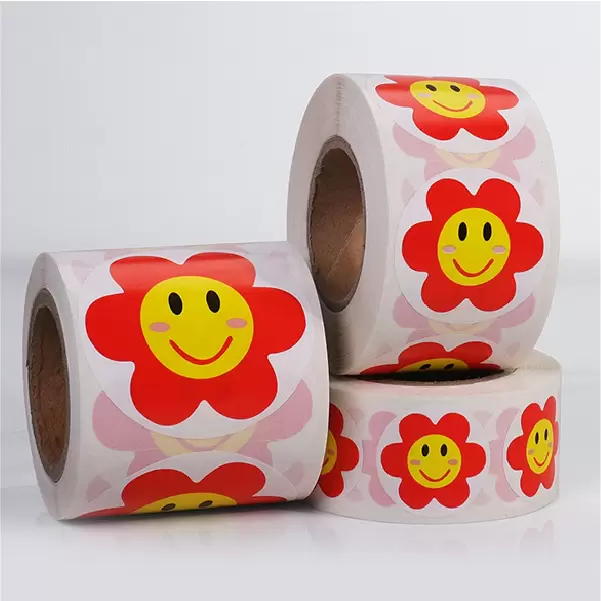
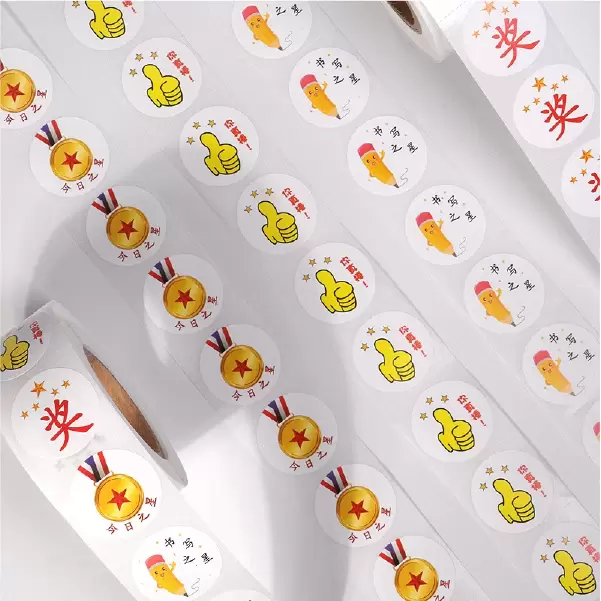
Die cutting is also important when a label requires a special shape. For example, a manufacturer may need round labels, oval labels, irregular labels, wrap-around labels, or labels designed to fit a specific container.
The choice of finishing should be based on the packaging and actual application rather than simply adding as many effects as possible.
Many food manufacturers need labels containing changing information. Batch numbers, production dates, expiration dates, serial information, barcodes, and QR codes may vary from one production run to another.
In these cases, variable data printing can be useful. The label manufacturer needs to ensure that the printed information remains clear and scannable.
Barcode quality is particularly important for food products entering retail, warehouse, or logistics systems. A label that looks attractive but produces an unreliable barcode can create practical problems during inventory and distribution.
For large production orders, it is also useful to confirm the data format, printing sequence, and proofing process before mass production begins.
One of the most practical steps in custom food label purchasing is sample testing.
Before placing a large order, apply the actual label sample to the real packaging. Then test it under conditions similar to the final application.
For example, refrigerated food labels should be tested in a refrigerator. Labels for frozen products should be tested under low-temperature conditions. Bottles should be handled and transported as they would be in normal distribution.
Check whether the label:
Sample production can help identify problems before they become production-scale issues.
For food businesses, working with a manufacturer that can handle multiple processes under one production system can simplify customization.
Wenzhou Baihengyu Printing Co., Ltd., established in 2010, is located in Wenzhou Economic and Technological Development Zone, Zhejiang Province. The company integrates creative design, printing production, finishing, and logistics services.
Its production capabilities cover a wide range of self-adhesive label materials, including coated paper, thermal paper, synthetic paper, PVC, PET, matte silver, and fragile paper. Different adhesive options, including oil-based, hot-melt, and water-based adhesives, can be selected according to application requirements.
The company also provides food and daily chemical labels, electrical labels, anti-counterfeiting labels, color boxes, gift boxes, product manuals, and other commercial printing products.
Its production equipment covers printing, die cutting, and post-processing, with finishing capabilities such as hot stamping, spot UV, laminating, embossing, variable data printing, tamper-evident solutions, and anti-counterfeiting processes.
This allows customers to handle different label requirements through one supplier, from small sample orders to larger export orders.
Choosing custom food labels is not simply a matter of selecting a design and printing it on paper. The packaging material, surface condition, storage temperature, moisture exposure, adhesive, label size, printing method, and finishing requirements all influence the final result.
For dry food packaging, coated paper may provide a suitable combination of print quality and appearance. For products exposed to moisture or refrigeration, synthetic materials or more durable label structures may be more appropriate. For bottles and containers, adhesive selection is particularly important.
The most reliable approach is to define the actual packaging and application environment first, then select the label material, adhesive, printing process, and finishing method accordingly. Testing samples on real packaging before mass production can further reduce application problems.
With its experience in customized printing and packaging solutions, Wenzhou Baihengyu Printing Co., Ltd. provides design support, sample production, customized quotations, quality inspection, and order tracking, helping food manufacturers develop labels that are practical, durable, and suitable for their specific packaging requirements.