












How to Choose Custom Food Labels for Different Types of Food Packaging
Sep 28, 2026
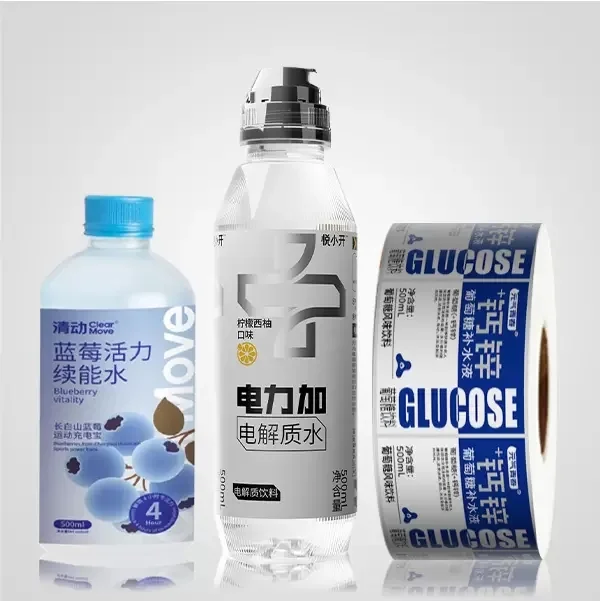
Food labels are more than a way to display a product name or brand logo. They provide important information about ingredients, specifications, usage, storage, batch details, and other product information while also helping food and beverage products stand out on crowded shelves. For manufacturers, distributors, and brand owners, choosing the right food label manufacturer is therefore an important part of building reliable packaging.
However, not every label supplier can handle the requirements of food packaging. Different food products may require different label materials, adhesives, printing methods, surface finishes, and production processes. A label that works well on a dry food package may not be suitable for a refrigerated beverage bottle or a container exposed to moisture.

So, how should you choose a food label manufacturer for custom food packaging? The following factors can help you make a practical decision.
The first step is to look at whether the manufacturer has actual experience producing food and beverage labels.
Food packaging often involves specific requirements related to material selection, adhesion, printing quality, durability, and information readability. A manufacturer that regularly produces food labels is more likely to understand these practical requirements and recommend suitable materials and production processes.
It is also useful to check whether the manufacturer serves different food packaging applications. Labels for bottled beverages, snacks, sauces, frozen foods, canned products, bakery items, and other packaged foods may have different requirements.
Wenzhou Baihengyu Printing Co., Ltd. has been engaged in the printing and packaging industry since 2010. Based in Wenzhou Economic and Technological Development Zone, Zhejiang Province, the company provides customized printing and packaging services for food and beverage, daily chemical products, pharmaceuticals, electronics, industrial products, logistics, and other industries.
This experience allows the manufacturer to approach food label production from an application perspective rather than simply printing a design onto a piece of material.
Material selection is one of the most important decisions in custom food label production.
Paper labels are commonly used for products stored in relatively dry conditions. Coated paper can provide a smooth printing surface and is suitable for many conventional food packaging applications. Thermal paper may be useful when variable information or thermal printing is required.
For applications that require better resistance to moisture, abrasion, or environmental changes, synthetic materials can be considered. PET, PVC, synthetic paper, and other materials can provide different levels of durability depending on the application.
For example, a food product stored in a refrigerator may experience condensation. If the label material and adhesive are not properly selected, the label may wrinkle, lift, or fall off. A manufacturer should therefore consider the actual storage and transportation conditions before recommending a material.
Baihengyu offers a variety of self-adhesive label materials, including coated paper, thermal paper, synthetic paper, PVC, PET, matte silver material, and destructible paper. This range allows customers to select materials according to product requirements instead of relying on a single standard material.
The adhesive is another factor that is easy to overlook.
A food label may look attractive when it leaves the printing factory, but poor adhesion can create problems during transportation, storage, or retail display. Different packaging surfaces, temperatures, humidity levels, and container materials can affect label performance.
For custom food packaging, manufacturers may need to consider whether the label will be applied to glass, plastic, metal, paperboard, or another surface. The shape of the container is also important. Curved bottles and irregular packaging may require different adhesive performance from flat cartons.
Baihengyu uses different adhesive technologies, including oil-based adhesive, hot-melt adhesive, and water-based adhesive. This allows the label structure to be adjusted according to the application instead of using the same adhesive for every product.
Before placing a production order, customers should provide information about the packaging surface, storage conditions, application temperature, and expected usage environment. These details help the manufacturer select a more appropriate adhesive solution.
Food packaging competes heavily for consumer attention. Clear text, accurate colors, sharp graphics, and consistent printing can make a significant difference to the final appearance of a product.
When choosing a food label manufacturer, check whether the supplier can handle the printing quality required by your packaging design. It is also worth considering whether the manufacturer offers finishing processes that can improve the appearance or functionality of the label.
Common options include:
For premium food products, for example, foil stamping or embossing can be used to highlight a logo or key design element. For products requiring variable information, variable data printing can help with batch numbers, serial numbers, or other changing information.
The important point is that finishing processes should serve a specific packaging purpose rather than being added simply for appearance.
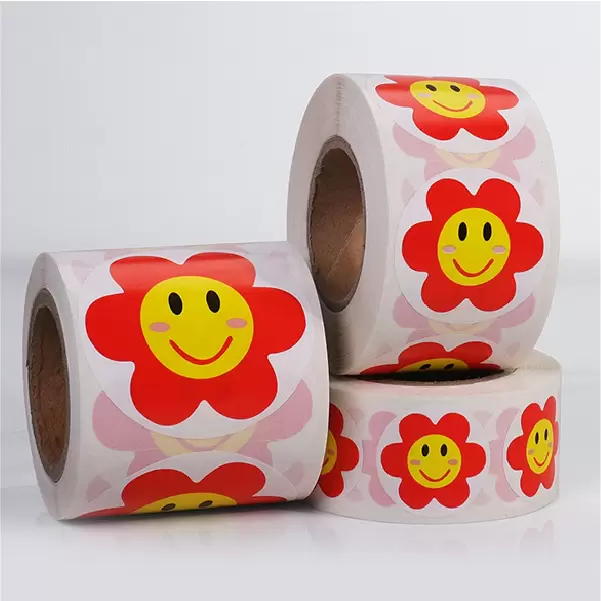
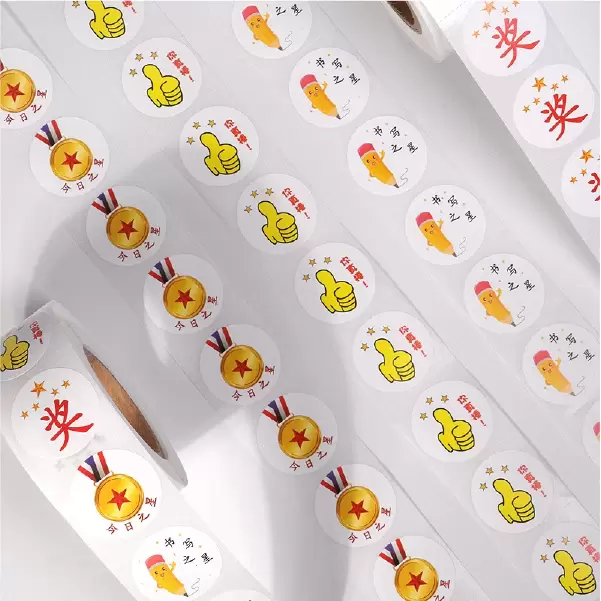
Food brands often need labels in different sizes, shapes, materials, and structures. Some products may require simple rectangular labels, while others may need custom die-cut shapes that match a particular bottle, jar, pouch, or box.
A suitable manufacturer should be able to support customization from design preparation through final production.
Baihengyu operates as an integrated printing and packaging manufacturer covering creative design, printing production, post-processing, and logistics. Its production facilities include printing, die-cutting, and post-processing equipment, allowing different stages of label production to be managed within one production system.
Customers looking for custom food labels can therefore discuss material, adhesive, size, shape, printing, and finishing requirements with the manufacturer before production.
Consistent quality becomes especially important when labels are produced in large quantities.
A reliable manufacturer should have a quality control process covering raw materials, printing, finishing, and final products. Problems such as incorrect colors, printing defects, inaccurate die cutting, poor adhesion, or inconsistent dimensions can cause additional work after delivery.
Baihengyu has established a quality inspection system covering the production process from incoming raw materials to finished product delivery. This helps control product consistency throughout different production stages.
For buyers, it is useful to ask practical questions before cooperation:
These questions can reveal much more about a supplier's actual production capabilities than a general claim about quality.
A sample is an important step for custom food packaging.
Before approving a large order, it is better to check the actual label on the intended packaging. A design that looks correct on a computer screen may perform differently after printing. Material texture, color reproduction, adhesive strength, die-cutting accuracy, and label application should all be checked.
Baihengyu provides design support and sample production services, allowing customers to confirm the final result before moving into larger-scale production.
During sample testing, customers should apply the label to the actual container whenever possible. Leave it under the expected storage conditions and check whether it remains firmly attached and readable.
Order flexibility is another practical consideration.
Some businesses may initially need a small batch for market testing, while established brands may require large-volume production for regular distribution. A manufacturer that can support both sample orders and larger production runs can make procurement easier as the business develops.
Baihengyu supports production from small-batch sample orders to large-volume export orders. Its integrated production and logistics capabilities also allow customers to coordinate design, manufacturing, post-processing, and delivery through one supplier.
When comparing manufacturers, the lowest quotation does not necessarily represent the most suitable solution. The actual cost of a label project can also be affected by material selection, adhesive performance, printing consistency, rework, delivery problems, and rejected products.
Instead of comparing only the unit quotation, buyers should consider the complete production process.
A manufacturer that can provide material recommendations, design support, samples, quality inspection, production tracking, and delivery coordination may reduce communication problems between multiple suppliers.
For food brands with regular packaging requirements, this can make the entire purchasing process more manageable.
A food label supplier should ideally be able to support changing requirements as a product line develops.
A new food brand may begin with one product and a small label order. Later, it may introduce new flavors, packaging formats, seasonal products, or different sizes. Working with a manufacturer that has a broad material and production capability can make these changes easier to manage.
Since its establishment in 2010, Wenzhou Baihengyu Printing Co., Ltd. has developed a broad range of printing and packaging products, including self-adhesive labels, food and daily chemical labels, electrical labels, anti-counterfeiting labels, packaging boxes, brochures, instruction manuals, and carbonless paper.
Its production capabilities cover different materials and processing methods, while its quality management system is designed to control the process from raw materials to finished products.
Choosing a food label manufacturer should not be based only on printing capability or a product catalog. The right supplier should understand the application, recommend suitable materials and adhesives, provide reliable printing and finishing, maintain consistent quality, and support the order from sampling through delivery.
For custom food packaging, start by identifying the actual requirements of your product: packaging material, storage conditions, label size, adhesive requirements, printing design, finishing processes, order volume, and delivery schedule. Then evaluate manufacturers according to their experience and ability to meet those requirements.
With more than a decade of experience in printing and packaging, Wenzhou Baihengyu Printing Co., Ltd. combines design, printing, die cutting, post-processing, quality inspection, and logistics support to provide customized label and packaging solutions for customers in food and other industries. This integrated approach can help brands develop food labels that are not only visually suitable but also practical for real-world production, storage, transportation, and retail applications.